
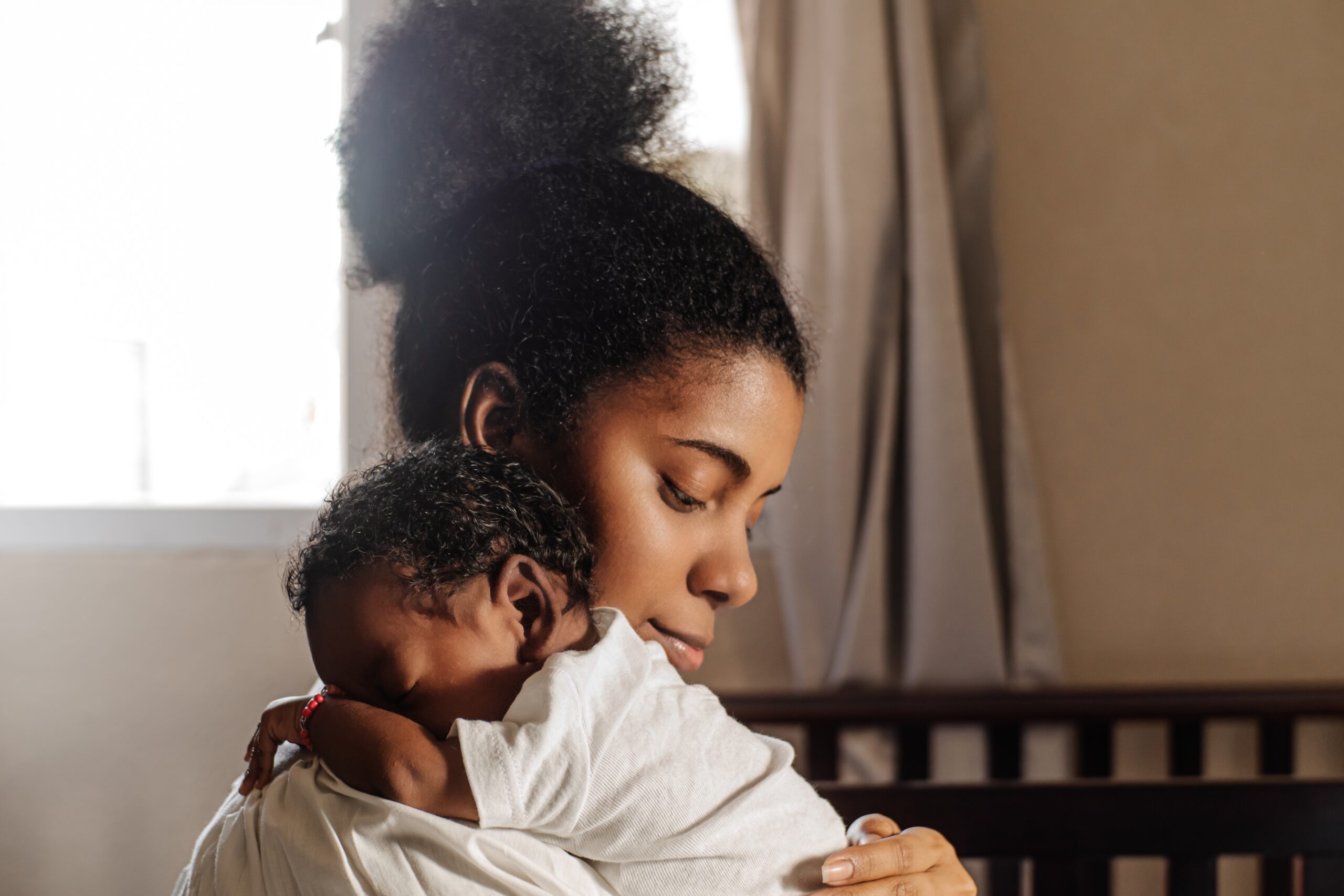

In a few weeks, the United States will mark 250 years since it declared that all people are entitled to life, liberty, and the pursuit of happiness. We are arriving at that milestone in a country struggling to live up to its own stated values — and nowhere is that more visible than in how we treat mothers.
For mothers and birthing people, that gap is not abstract. It lives in the body.
The U.S. remains one of the most dangerous developed nations in the world to give birth. Black mothers die from pregnancy-related causes at more than three times the rate of white mothers. One in four women returns to work within two weeks of giving birth — not because they are ready, but because they cannot afford not to. Mental health conditions — including suicide and substance use — are now the leading cause of maternal death in the United States. And 87% of those deaths are preventable.
At a recent community gathering, 4th Trimester board member Brooke Cutler said it plainly:
“What we’re talking about is not a public health issue. We’re talking about social justice. We’re talking about human rights.”
She’s right. And 250 years in, we are still fighting to have that recognized.
But here is what we also know: this is fixable. Not inevitable. Not permanent. Fixable.
At that same gathering, therapist and advocate Ebony Staton of Black Girls Mental Health Collective framed it this way: when mothers are overwhelmed, stressed, and unsupported, their children borrow that nervous system. That stress doesn’t stay home — it moves into schools, into communities, into the next generation. The inverse is also true. When mothers are held, supported, and seen, that ripples outward too.
The solution isn’t complicated. As our partner Marjorie Gilberg of NCJW-LA said:
“Cash, care, and community. Those shouldn’t be optional. They shouldn’t be negotiable.”
That is exactly what 4th Trimester is building — not just programs, but a village. A place where mothers and birthing people are asked what they need, trusted with the answer, and supported without judgment or red tape.
If the last 250 years have taught us anything, it’s that change does not come from waiting for systems to fix themselves. It comes from people who refuse to stop showing up for each other.
That’s what we do here. And we want you in it.


