
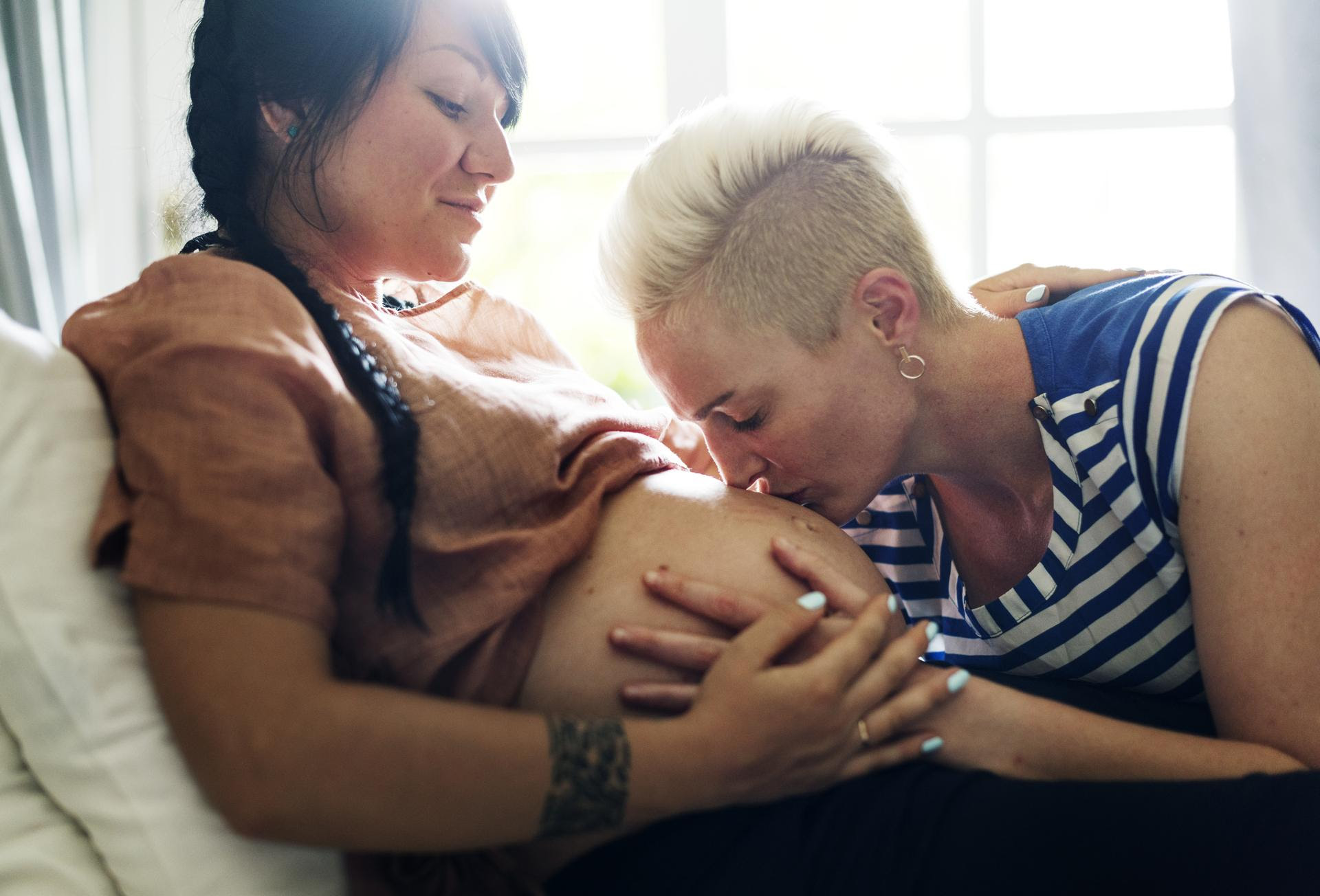

For LGBTQ+ birthing people, the postpartum experience is too often marked not by support, but by systems that were never designed with their care in mind. That is not a personal failure. It is a structural one.
The data is clear. In a nationally representative poll of people who gave birth in the last five years, nearly one in three LGBTQ+ individuals described their childbirth experience as less than “good” — compared to fewer than one in five of their cisgender, heterosexual counterparts. The gap widens further when it comes to mental health. LGBTQ+ birthing people face elevated risk of perinatal depression at every severity level, and are significantly less likely to access treatment even as symptoms worsen — meaning the people who need care the most are the least likely to get it. Compared to straight and cisgender adults, LGBTQ+ adults are twice as likely to experience a mental health condition; transgender adults, four times as likely. [AAMC]
LGBTQ+ birthing people encounter care that assumes everyone is straight and cisgender — facing stigma, isolation, and providers who lack the knowledge to care for them. Some transgender birthing parents avoid perinatal care altogether out of fear of discrimination or the absence of gender-affirming options. And policy shapes all of it: research shows that policy shifts reducing stigma and increasing legal protections may be critical to closing these health gaps — while states that maintain discriminatory laws leave LGBTQ+ parents to navigate an already broken system with even less protection. [NIH]
At 4th Trimester, we believe postpartum care must be built for everyone — and that means actively building it that way. Our Care Closet provides diapers, formula, and recovery essentials with dignity for every kind of family. Our community-building work creates peer networks and shared spaces where LGBTQ+ parents are seen, not erased. This is what inclusion looks like in practice: not a footnote, but a foundation.
This Pride Month, we honor LGBTQ+ birthing people by naming what the research confirms and what our community already knows — care that doesn’t see you isn’t care at all.
We are proud to share the resources in our LA County community that do center the queer community, such as Maternal Mental Health NOW and their queer community support group through their SANA SANA program. Check it out here.


